
Carrie Wieteska, Senior Account Manager
If you’re familiar with the dead internet theory, you know it’s nothing new. As an integrated communications agency specialising in technology, it’s a topic we find both interesting and highly relevant to our work.
For those of you that are less familiar, the dead internet theory is the idea that the internet has been taken over by artificial intelligence (AI) bots.
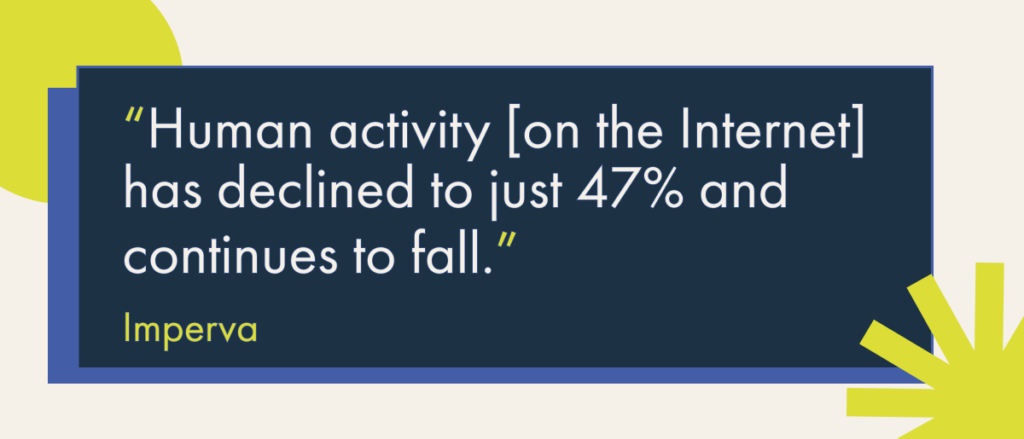
You might also know that, as of two years ago, it’s become less of a theory and is instead edging towards reality: Imperva found that, in 2024, 51% of global web traffic was automated. Last year, that number went up to just over 53%.
Increasingly, people are asking an AI assistant to gather their online information – meaning the bot crawls multiple websites while the human only sees the AI chat screen. From the user’s perspective, little has changed. They have a question. They go online. They get an answer.
But for the businesses trying to reach them, it’s a different story.
Why AI visibility matters for communications
Traditionally, businesses have used a combination of earned and paid media to build their profiles along with owned channels. Each has its benefits: while earned media carries a higher level of trust, paid media guarantees placement in a particular outlet. And with both paid and owned, you have more control over the message.
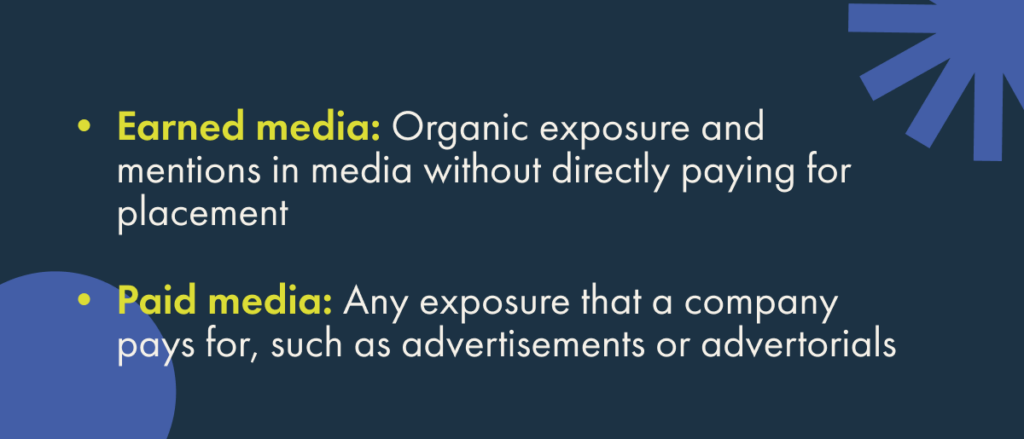
But the balance changes when you consider how AI sources information: just 0.3% of AI citations come from paid content.
In contrast, 22% come from earned placements in journalism – but only from sources AI bots can crawl. That means a prestigious publication with articles behind a paywall might not have the same visibility in AI-generated answers as a more accessible source.
That’s not to say paywalled coverage has lost its value. A feature in a paywalled publication still builds credibility and influences opinion through its direct audience. But nowadays, we also need to think beyond where a story initially appears and consider where else it can be discovered and referenced by AI.
How businesses can strengthen their AI search presence
If you’re looking to increase your AI visibility, journalism should be just one element of a strong content mix. Your owned media strategy should also be using corporate blogs, social media channels and building your website copy.
Together, these content types account for around 63% of AI citations.
And they also work well together from a brand perspective. A strong piece of corporate research could become a news story covered by multiple outlets, an expert blog post and a series of social posts. Each serves a different purpose, but collectively they help establish your business as a credible source of information.
Don’t forget the humans
While AI citations are an important part of a communications strategy, not every customer is using an AI bot to research their next purchase or form an opinion. People still read newspapers and browse websites directly – think about the other 47% of Imperva’s web traffic.
AI might change how your message reaches some people, but many of the fundamentals of a good communications strategy haven’t changed: clear messaging, expert insight and a strong understanding of your audience are key.
What has changed is the type of content and channels you use to make that strategy visible.
The next chapter
The dead internet theory might once have sounded like the plot of a science-fiction film, but it’s already reshaping how businesses communicate.
This shift calls for a move beyond siloed media relations towards a broader communications strategy that combines credible earned coverage with strong owned content.
That’s why, as a full-service integrated communications agency, we combine media relations with digital marketing and social media. Whether your next customer finds you through a newspaper article, a traditional Google search or a conversation with their favourite AI bot, our goal is the same: making sure you’re a part of the conversation.
If your business is worried about staying visible on the changing internet, get in touch with our team.