
Lesley Brydon, CEO | Founder
For years, community engagement was sometimes viewed as something that sat around the edges of a major decision. Important, certainly. Desirable, absolutely. But beyond statutory consultation requirements, not necessarily something that would determine the success – or otherwise – of a project.
That is changing.
A recent case in the Scottish Borders provides an interesting example. The Scottish Public Services Ombudsman upheld a complaint about Scottish Borders Council’s consultation over proposed changes affecting five rural nurseries, concluding that aspects of the process were unreasonable and amounted to maladministration.
Significantly, it was the consultation process itself that came under scrutiny.
The Ombudsman found that consultees had not been given sufficiently clear information about the purpose and scope of the exercise or how their views would influence decisions. Record-keeping varied and reporting to councillors did not adequately reflect the strength of opposition. The Council has accepted the findings and apologised.
It would be wrong to assume that this decision automatically calls other consultations into question – but the story has certainly moved others to call for a review of stakeholder consultations and the planning decisions made on the back of them.
Either way, it does illustrate something increasingly important for any organisation making decisions that affect communities: it is no longer enough simply to say that you consulted the public. You need to be able to demonstrate how you did it, what you heard and what happened as a result.
Getting stakeholder engagement right
For Scotland’s landowners, that principle is becoming particularly pertinent.
Land reform is bringing greater expectations around transparency and community engagement. At the same time, communities themselves are increasingly informed, organised, and willing to challenge decisions – and the processes behind them.
Good community engagement therefore needs to begin long before a planning application, land-use change or contentious decision lands on someone’s desk.
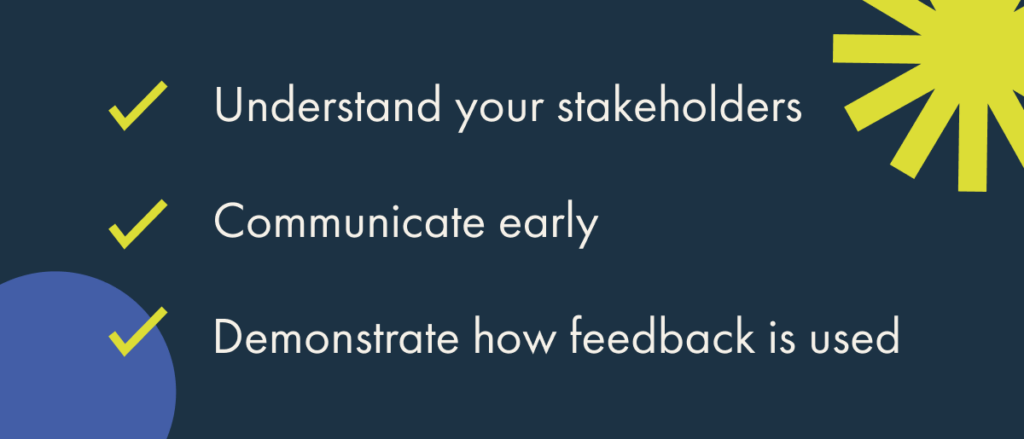
It means understanding who your stakeholders are, communicating early, and being clear about what is – and isn’t – open to influence. It means keeping proper records, listening to feedback and, crucially, demonstrating how that feedback has been considered, even when the eventual decision isn’t the one everyone wanted.
Done well, this isn’t simply about compliance. Good stakeholder engagement builds trust, reduces the potential for conflict and creates stronger relationships between landowners and the communities in which they operate.
That’s the thinking behind Open Ground, Clark’s new community engagement service for landowners.
Because in today’s environment, good community engagement isn’t a nice-to-have.
It’s becoming part of the licence to operate.
Looking to strengthen your stakeholder engagement strategy? Get in touch with Clark.