

Eesha Devgan, Senior Account Executive
In the age of an ever-changing media cycle and trending topics that shift by the hour, businesses face constant pressure to stay relevant. But there’s a fine line between being part of the conversation and forcing your way into it.
This is where newsjacking comes in handy. Done well, it’s one of the sharpest tools in the modern PR kit. But get it wrong, and you could turn a quick win into a clumsy, long-lasting reputation misfire.
Smart newsjacking starts with understanding why it works and where it can easily go wrong.It’s a tactic we use frequently at Clark to support our clients in adding timely, thoughtful commentary to fast-moving stories that matter to their audiences.
What is newsjacking?
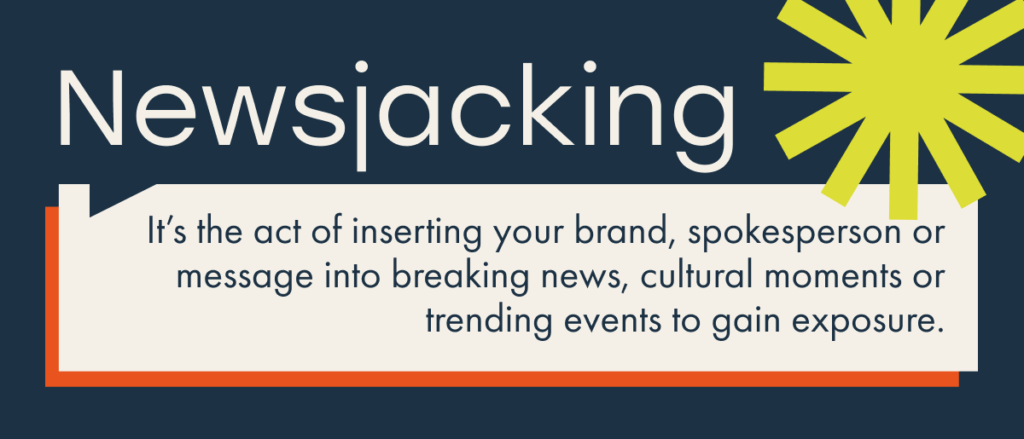
Newsjacking is the act of inserting your brand, spokesperson or message into breaking news, cultural moments or trending events to gain exposure. Success doesn’t always mean securing boatloads of coverage. Often, it can be just as effective to secure a single high-quality thought-leadership spot in a regional paper or trade publication. The key is to ensure your perspective is relevant, unique and timely.
Think of a cybersecurity firm releasing a rapid response briefing after a global ransomware attack, offering IT leaders clear next steps and advice on how this can be avoided in the future. That’s textbook newsjacking: on-topic, valuable and builds authority when it’s needed most.
When executed well, newsjacking should:
- Amplify visibility by riding the wave of piqued interest
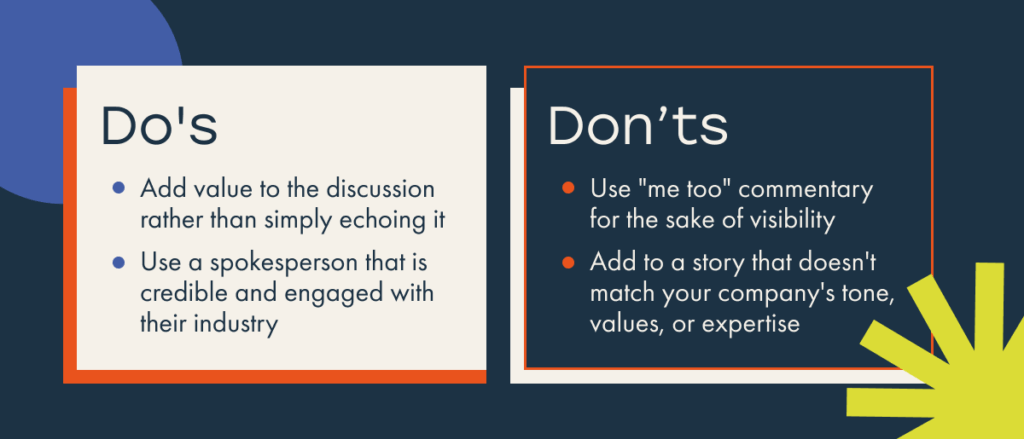
- Position your company or spokesperson as credible and engaged with their industry
- Add value to the discussion rather than simply echoing it
It’s about prioritising relevance over reach. You don’t need to own the moment; you just need to enhance it in a way that aligns with your business’s values.
Case in Point: WorkNest Scotland
When the UK government announced changes to flexible working rights in early 2024, meaning employees would have the right to request flexible working from day one of employment, HR services provider, WorkNest Scotland, jumped right into the conversation.
The company pitched its legal director to media outlets with commentary on the implications of the new legislation for mid-size businesses, flagging potential challenges and best practice for preparing policies. The expert insight was picked up in the Financial Times.
Why did this work?
By reacting quickly to a relevant business issue and providing a solution-led response, WorkNest Scotland earned coverage while positioning itself as a trusted authority. It wasn’t self-promotional, it was useful.
But not every attempt sticks the landing…
When it can backfire
Newsjacking can go wrong if it’s rushed or lacks strategic alignment. While you want to move fast, it should never be at the expense of sound judgment. You need to make sure you’ve adopted a targeted approach and understand the tone and context of the moment.
It’s important to:
- Sense-check tone and messaging
- Be sure your voice belongs in the conversation
- Avoid “me too” commentary for the sake of visibility
Timing is everything, but so is judgment. Too fast a response can feel opportunistic, especially during sensitive or tragic events. If the moment doesn’t suit your tone, values or expertise, it’s often better to sit it out.
This is especially risky when commenting on more sensitive or tragic events, such as natural disasters or global conflicts. Late input might seem like you’re exploiting the story rather than contributing with sincere insight.For example, in 2012 when Hurricane Sandy was in full force, Gap’s tweet about shopping while stuck indoors was criticised as tone-deaf and insensitive. While the brand did state it hoped people were staying safe during the storm, it appeared disingenuous. By promoting sales in the same breath as acknowledging a serious natural disaster, the message came across as insincere and self-serving. This misstep highlights how linking your brand to a crisis without genuine relevance or sensitivity can harm credibility rather than build it.
Final thoughts
Newsjacking isn’t about crashing the party. It’s about joining the conversation when it makes sense, and only if you’ve got something worthwhile to say.
For brands, this means:
- Monitoring industry news daily
- Establishing a list of topics your brand can provide credible opinions or commentary on Preparing commentary assets in advance
- Training spokespeople to be sharp, clear and available
- Understanding the difference between newsjacking and news-chasing
We help businesses spot opportunities worth speaking to and know when to sit one out. Because in PR and communications, timing everything, and so is relevance.